

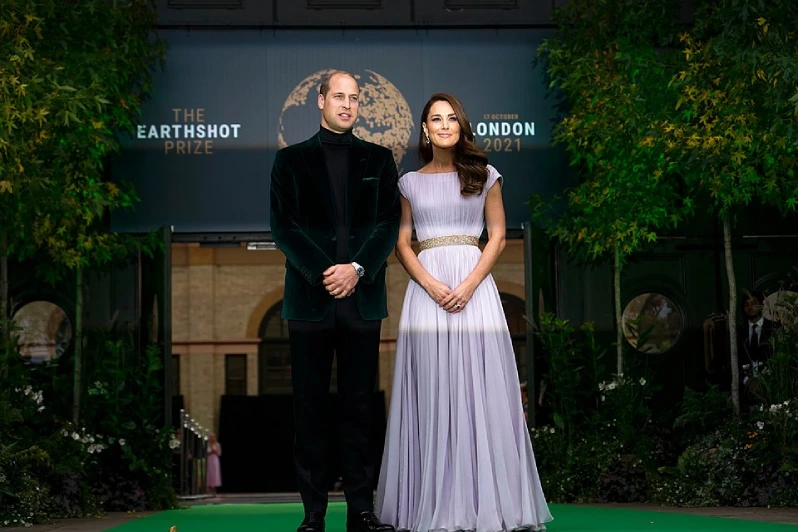
When Prince William brought the Earthshot Prize to Brazil this year, the awards were supposed to celebrate innovation—not ignite a culinary storm.
Yet a simple menu decision did exactly that.
The decision to serve a fully vegan meal at the ceremony in Rio de Janeiro has sparked a global debate about sustainability, culture, and their intersection.

The Earthshot Prize, founded in 2020, highlights groundbreaking environmental solutions.
This year’s event marked its Latin American debut, set against the backdrop of Brazil’s astonishing biodiversity and the Amazon Rainforest’s fragile ecosystem.
A Clash of Culinary Worlds
Among those chefs was Saulo Jennings, a Brazilian cook celebrated for honoring Amazonian traditions. He had been invited to design the dinner.
His proposed menu featured pirarucu—a giant freshwater fish once endangered but now sustainably harvested through Indigenous management programs.
Soon after, Jennings says he was informed that the entire menu needed to be vegan, later softened to vegetarian. He withdrew in frustration, calling the decision “a lack of respect for our culture.”
In one interview he quipped, “It’s like asking Iron Maiden to play jazz.” For Jennings, sustainability in the Amazon means eating what the forest and rivers offer—fruit, cassava, nuts, and occasionally fish. That connection to nature, he argued, is sustainability.
Why the Vegan Menu Was Chosen
Earthshot organizers said the plant-based menu reflected the prize’s mission: to lead by example. Industrial livestock and large-scale fishing are among the world’s biggest environmental threats, driving deforestation, water pollution, and biodiversity collapse.
In Brazil, cattle ranching remains the leading cause of Amazon destruction. Serving a vegan menu was meant to model the kind of climate-friendly choices that scientists say are crucial for a livable future.
Events worldwide have taken similar steps. The Oscars after-party went plant-based in 2020; several UN climate summits now do the same.
The message is clear—food can be both symbolic and practical in shaping public perception of sustainability.
The Bigger Question: What Counts as Sustainable?
Not everyone agrees that vegan equals sustainable in every context. Most climate research targets industrial meat production, not traditional or subsistence systems.
A 2022 study from the University of Bonn found wealthy nations must cut meat intake by at least 75 percent to meet emission targets, yet it also acknowledged that small-scale, regenerative practices differ sharply from factory farms.
In the Amazon, Indigenous fishing and forest-foraging have supported communities for centuries with minimal impact.
Critics of the Earthshot decision say lumping these food systems into the same category as industrial agriculture erases cultural nuance. Sustainability, they argue, isn’t a fixed recipe—it depends on scale, ecosystem, and tradition.
Global Goals, Local Realities
The controversy reveals a deeper tension inside modern environmentalism: global ideals often collide with local realities.
For Earthshot, the vegan dinner sent a strong climate signal; for Brazilian chefs, it felt like cultural erasure. Both sides share the same goal—a thriving planet—but see different paths toward it.
Reconciling those views is the real challenge ahead. Global policies need to respect local knowledge, while regional food traditions must evolve with environmental limits. Finding that balance is harder than designing a menu—but far more important.
A Lesson Beyond the Table
Ultimately, this debate isn’t about one evening’s dinner. It’s about how humanity redefines progress without losing identity. A plant-based world may indeed be vital for the planet’s survival, but achieving it will require empathy as much as evidence.
Perhaps the real takeaway from Rio isn’t who cooked what—but that sustainability, like cuisine itself, flourishes when it’s seasoned with understanding.